
Original article
“Am I dieting just to feel this way? I feel disappointed in myself and miserable…”
Coping with discouragement during weight loss!
Sometimes you begin a diet, but your weight does not fall as much as planned,
and your outward appearance does not change very much.
Being unable to eat the foods you want can also bring a strong sense of loss or exclusion.
“What am I doing, when I cannot even eat what I want?”
Moments of such self-disappointment can become a crisis in a diet.
How can you overcome discouragement and keep pursuing weight management successfully?
01. Eat foods you enjoy
Dieting means improving eating and daily habits, rather than simply starving yourself.
The article suggests eating the foods you like in moderation earlier in the day,
and keeping dinner small and simple.
Because energy expenditure needs to exceed intake to obtain the desired result,
it recommends eating less and moving more.
02. Reconsider your target weight
If your weight-loss target is excessively ambitious, seeing weight decrease more slowly than expected
can cause impatience and low mood.
Extreme goals are difficult to achieve, and even achieving them may be followed quickly by weight regain.
Even when you are dissatisfied with the pace, set a weight-loss goal within a realistic range.
03. Weigh yourself only once a week
Constant weighing can make dieting obsessive.
Weighing yourself once a week is enough.
Encourage yourself with phrases such as “I am doing well” and “I can do this,”
and acknowledge progress with thoughts such as “I have already lost 500 grams since last week.”
04. Take a break
If you have reached a weight-loss plateau, the article recommends taking a temporary break of two to three weeks.
During this period, focus on maintaining weight rather than losing more.
Make time to relax by listening to music you enjoy or walking somewhere scenic.
The article links sunlight with release of the mood-related hormone serotonin and recommends getting outdoors when possible.
When discouragement about dieting worsens depression, you may start avoiding going out,
which reduces physical activity and energy expenditure while calorie intake may increase.
The article connects the resulting increase in body fat with higher risk of obesity and various lifestyle-related diseases.
Therefore, even while adjusting meals and exercising for weight management,
preventing diet-related depression matters.
Repeated diet failures and cycles of weight regain can be accompanied by problems such as binge eating.
If managing your diet alone feels difficult, or you are unsure how to manage food or exercise,
and these concerns are causing stress,
it is helpful to find someone who can work alongside you toward healthy weight management:
seek support from a qualified professional.
YONSEI SaeBom Medical Clinic describes its approach as healthy weight management tailored to each individual,
minimizing loss of muscle while focusing on body-fat reduction,
to help prevent weight regain and maintain a healthy weight.
Original illustrations & English text
The original artwork is preserved below, with English translations of the text in each illustration.

News special: coping with diet-related discouragement. “Am I dieting just to feel disappointed in myself and miserable?”
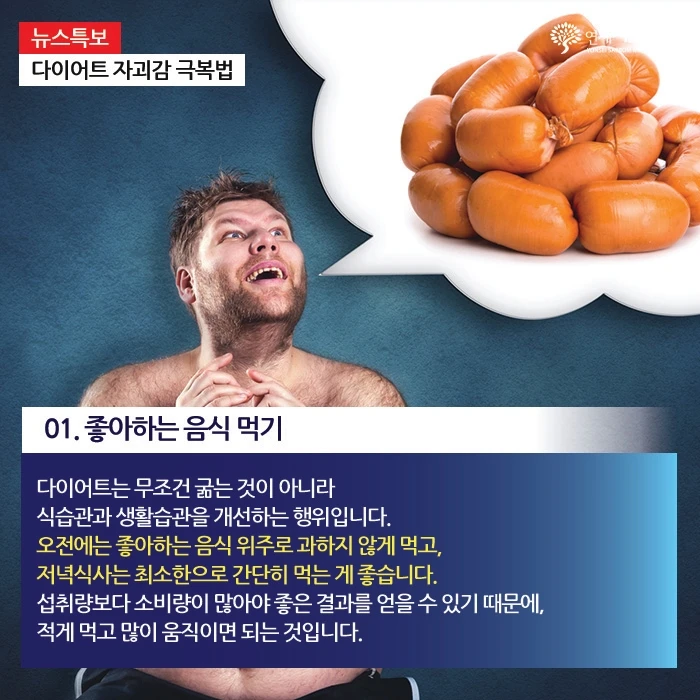
01. Eat foods you enjoy Dieting means improving eating and daily habits, rather than simply starving yourself. The article suggests eating the foods you like in moderation earlier in the day, and keeping dinner small and simple. Because energy expenditure needs to exceed intake to obtain the desired result, it recommends eating less and moving more.
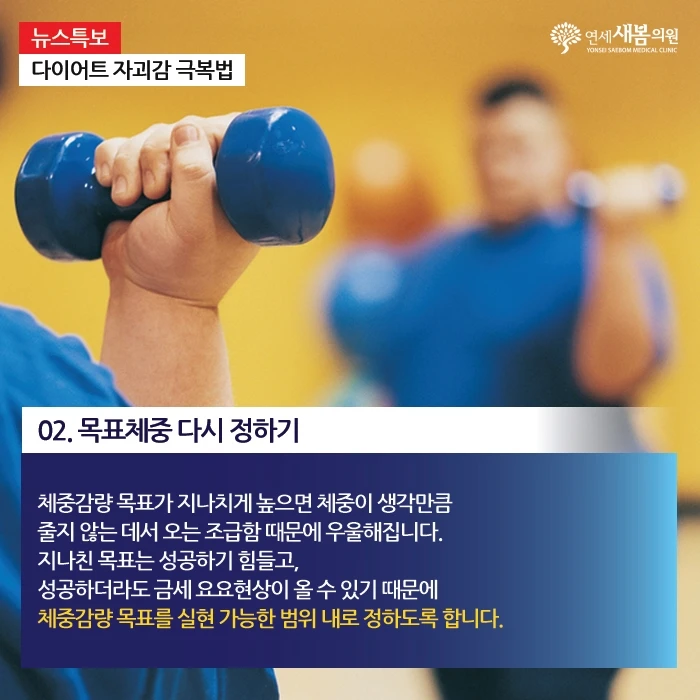
02. Reconsider your target weight If your weight-loss target is excessively ambitious, seeing weight decrease more slowly than expected can cause impatience and low mood. Extreme goals are difficult to achieve, and even achieving them may be followed quickly by weight regain. Even when you are dissatisfied with the pace, set a weight-loss goal within a realistic range.
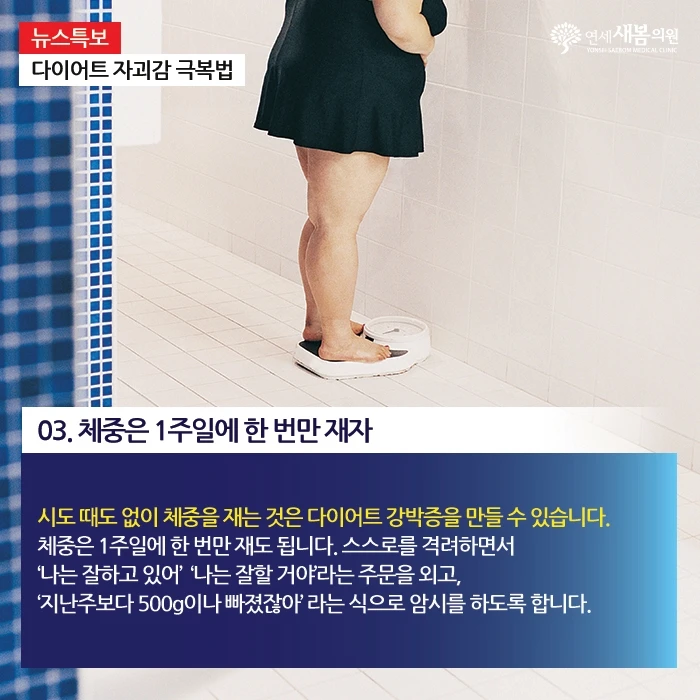
03. Weigh yourself only once a week Constant weighing can make dieting obsessive. Weighing yourself once a week is enough. Encourage yourself with phrases such as “I am doing well” and “I can do this,” and acknowledge progress with thoughts such as “I have already lost 500 grams since last week.”
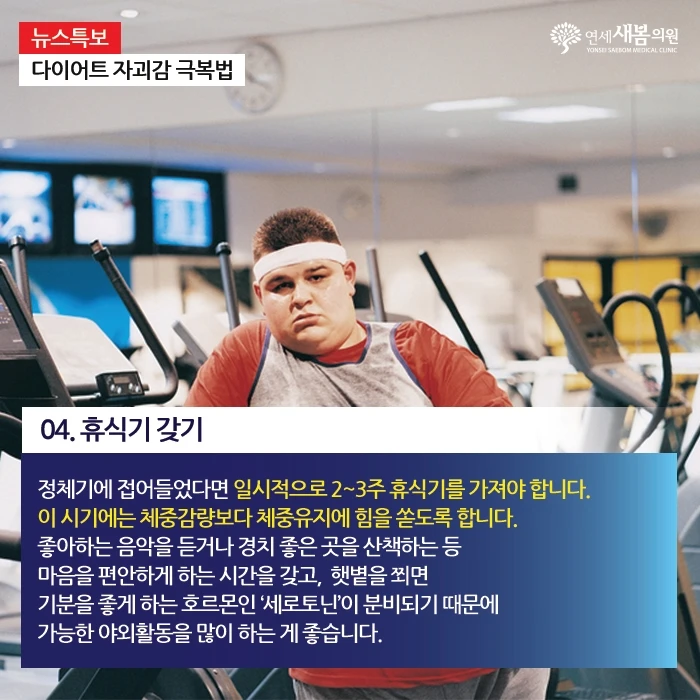
04. Take a break If you have reached a weight-loss plateau, the article recommends taking a temporary break of two to three weeks. During this period, focus on maintaining weight rather than losing more. Make time to relax by listening to music you enjoy or walking somewhere scenic. The article links sunlight with release of the mood-related hormone serotonin and recommends getting outdoors when possible.

When discouragement about dieting worsens depression, you may start avoiding going out, which reduces physical activity and energy expenditure while calorie intake may increase. The article connects the resulting increase in body fat with higher risk of obesity and various lifestyle-related diseases. Therefore, even while adjusting meals and exercising for weight management, preventing diet-related depression matters.

Repeated diet failures and cycles of weight regain can be accompanied by problems such as binge eating. If managing your diet alone feels difficult, or you are unsure how to manage food or exercise, and these concerns are causing stress, it is helpful to find someone who can work alongside you toward healthy weight management: seek support from a qualified professional. YONSEI SaeBom Medical Clinic describes its approach as healthy weight management tailored to each individual, minimizing loss of muscle while focusing on body-fat reduction, to help prevent weight regain and maintain a healthy weight.