

Original article
“Today I ate barely enough to survive and exercised as if my life depended on it!” (= I am harming my health!) The article warns that unhealthy dieting can worsen inflammation. How can we reduce harmful inflammation that makes the body unwell?
“Starting today, I am dieting: exercising hard and eating less!” But did you know the wrong approach can instead encourage inflammation? Inflammation is associated with various diseases. What should we keep in mind to manage weight healthily? Let us explore habits to add for better health.
People commonly recommend seven to eight hours of sleep. Duration matters, but the article emphasizes that quality matters even more, and considers deep sleep crucial even when sleep is shorter. People who snore or experience apnea may be stressed throughout sleep; sleeping with the mouth open can leave a dry or bitter mouth and facial puffiness in the morning. This cannot be regarded as restful sleep. The article explains that stress from poor sleep causes cortisol release, and chronically excessive cortisol can raise blood pressure and blood sugar, increasing susceptibility to chronic conditions such as hypertension, diabetes and heart disease. Restful sleep is therefore a basic and important foundation of health. People who struggle to fall asleep or frequently wake should seek assessment. See the related post for details: http://blog.naver.com/saebom2469/220875411276
What counts as appropriate exercise? Exercise can broadly be divided into aerobic activity, such as walking or swimming that leaves you breathing harder and sweating, and anaerobic or strength training, such as lifting weights. For aerobic activity, the article recommends an intensity at which you can talk to the person beside you, sweat a little and feel slightly challenged. Exercise that causes dizziness or severe breathlessness is considered excessive. The original article claims that sustained excessive intensity leads to much release of what it calls “lactic acid hormone,” which it links to fatigue and illness. More on the original discussion appears here: http://blog.naver.com/saebom2469/220881009902
For strength or “anaerobic” exercise, the article recommends alternate days rather than daily sessions, because improvement occurs through a repeated cycle of stimulation and recovery: train one day and rest the next.
As commonly discussed, it is important to eat sufficient fruit and vegetables in five colors: red, yellow, white, green and purple. Paying attention to foods rich in unsaturated fat, such as perilla oil, nuts and oily fish, can help suppress inflammation and prevent inflammation-related chronic conditions, according to the article.
We have now discussed everyday habits to add to reduce harmful inflammation. Weight management and better health are achievable, and understanding the right approach can help you succeed.
Health and body-shape management together: the YONSEI SaeBom Medical Clinic Hormone Balance Clinic.
Original illustrations & English text
The original artwork is preserved below, with English translations of the text in each illustration.

Can overly strenuous exercise and eating too little to lose weight cause inflammation? Habits to add and reduce for successful dieting, part 1: things to add.

Sleep quality matters more than duration. Get restful sleep, even when it is shorter. The original graphic says poor sleep can lead to excessive cortisol, raising blood pressure and blood sugar and increasing susceptibility to chronic diseases including hypertension, diabetes and heart disease.

A sleepless night spent awake: it is difficult to fall asleep every evening; you wake at least twice during sleep; falling asleep again takes a long time; fatigue does not go away.
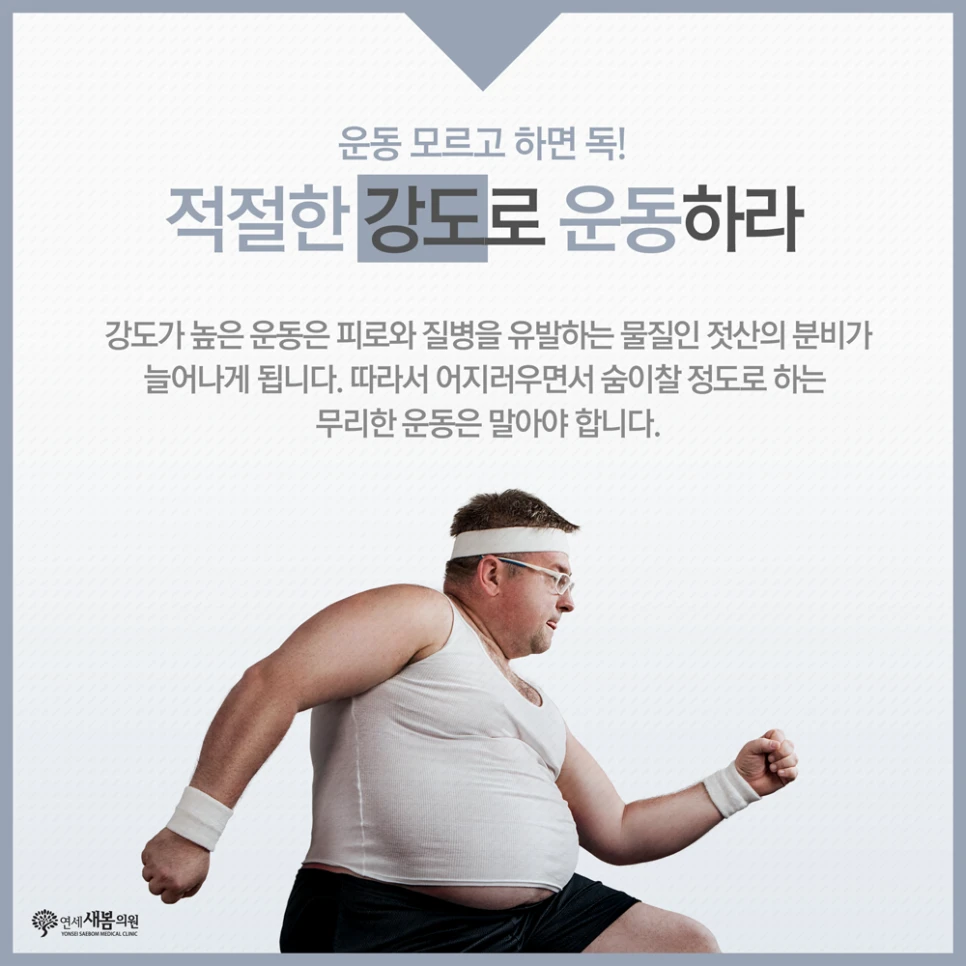
Exercise without understanding can be harmful: exercise at a suitable intensity. The original graphic links high-intensity exercise with increased release of lactic acid, which it describes as contributing to fatigue and illness. It advises avoiding exercise so excessive that it causes dizziness and breathlessness.

Lactic acid: a fatigue-related substance said to accumulate after exercise.
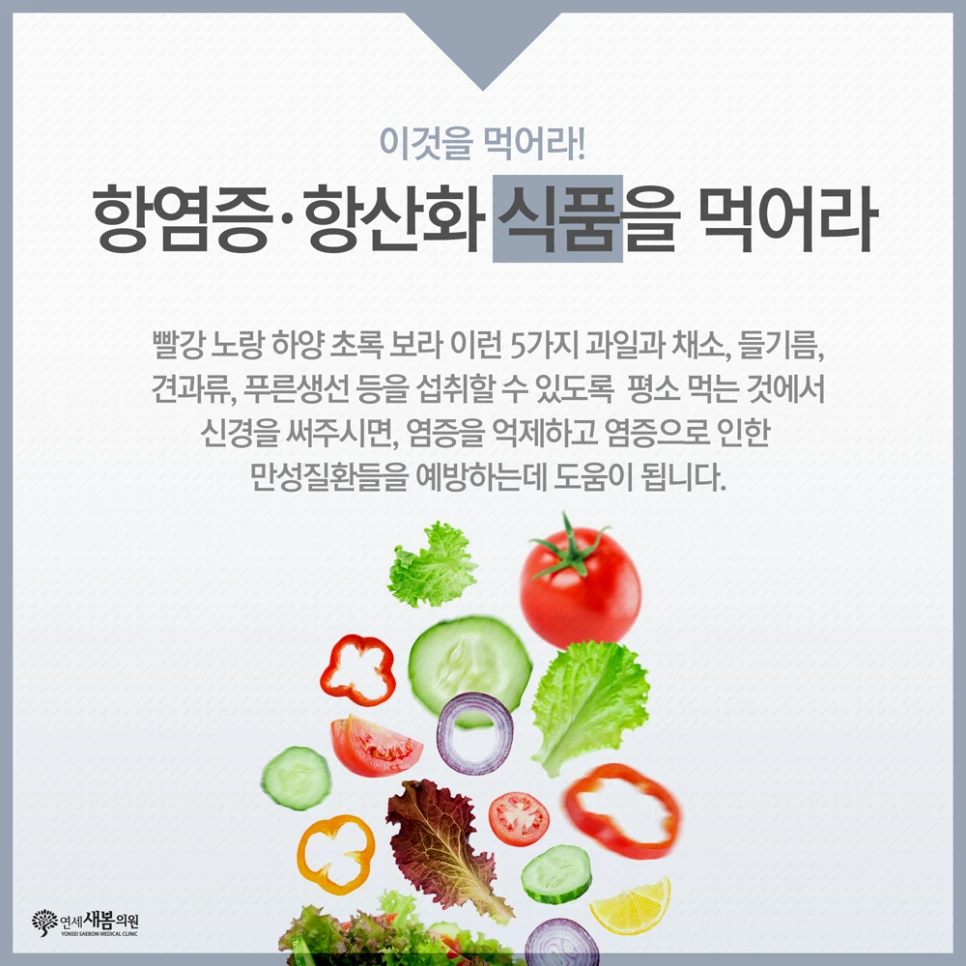
Eat anti-inflammatory and antioxidant foods. Pay attention to consuming fruit and vegetables in five colors—red, yellow, white, green and purple—along with perilla oil, nuts and oily fish. The original graphic describes these foods as helping suppress inflammation and prevent related chronic illness.

Dr. Chae Yong-hyeon’s Hormone Balance Diet.