

Original article
The truth and possible side effects of low-carbohydrate, high-fat dieting
YONSEI SaeBom Medical Clinic
The MBC Special program “The Misunderstanding of Fat,” which popularized the abbreviated Korean term for low-carb, high-fat eating,
featured an approach supplying more than 50% of intake from fat while restricting carbohydrate to 15% or less.
As the low-carbohydrate, high-fat (LCHF) diet attracted attention,
more members of the public began trying to follow it.
http://blog.naver.com/saebom2468/220828703858
What exactly is a “high-fat diet”?
More precisely, it is a low-carbohydrate, high-fat diet.
Foods previously considered strictly off-limits during dieting,
such as pork belly, butter and cheese, are instead encouraged.
The article describes daily intake proportions of 70% fat, 20% protein and 10% carbohydrate.
Its explanation treats carbohydrate as the principal enemy of weight control and minimizes its intake,
so the body breaks down stored body fat instead of using glucose obtained from carbohydrate
as energy, leading to weight loss.
As low-carbohydrate, high-fat dieting
became so popular that butter was in short supply,
five Korean medical and nutrition societies—the Korean Endocrine Society, Korean Diabetes Association,
Korean Society for the Study of Obesity, Korean Nutrition Society and Korean Society of Lipid and Atherosclerosis—
warned against following low-carbohydrate, high-fat eating without understanding it in detail.
They expressed concern that indiscriminate adoption could cause
serious harm to public health.
1. Long-term effectiveness can be difficult to achieve
The societies described low-carbohydrate, high-fat eating
as difficult to maintain over a long period.
By encouraging early fullness and suppressing appetite,
it may produce substantial short-term weight loss.
However, the article reports their view that long-term benefits are difficult without an appropriate approach and exercise.
2. Cardiovascular disease risk may increase
The article warns that an indiscriminate high-fat diet without a proper nutrition plan can cause heart disease.
Following low-carbohydrate, high-fat eating for a long period may raise LDL cholesterol,
often called bad cholesterol, and increase cardiovascular disease risk.
The original article also refers to Dr. Atkins, whose diet inspired the early-2000s “emperor diet” craze,
and claims he ultimately died of heart disease. This is a claim in the archived source.
Excessive fat intake can also make a varied diet difficult,
leading to nutrient imbalance and reduced fiber intake.
The societies also pointed out that reduced fiber intake can change intestinal microorganisms,
which the article links to increased inflammatory responses in the body.
3. The concern is simple sugars such as sugar and fructose
Both carbohydrate and fat are important energy sources for the body.
Extremely restricting carbohydrate reduces glucose available to the brain,
which the article associates with poor concentration. It also reports concern that beneficial complex carbohydrates
may be among the first foods restricted.
Rather than avoiding all carbohydrate unconditionally,
the article identifies the main priority as reducing
simple sugars that rapidly raise blood sugar.
Three practices for a healthy diet
The five societies proposed three practices for healthier eating.
First, understand your current eating habits accurately, then plan meals so that
carbohydrate does not exceed 65% and fat does not exceed 35%
of total calories, according to the percentages given in the article's prose.
Both fat and carbohydrate are nutrients the body needs.
However, the article recommends avoiding simple carbohydrates that rapidly raise blood sugar and saturated fat, which it describes as clogging blood vessels.
Second, reduce simple sugars and saturated fat,
and obtain carbohydrate from whole grains rich in fiber and nutrients,
such as barley, buckwheat, corn, sorghum, millet, whole wheat and brown rice.
These are the forms of carbohydrate the article recommends.
Third, patients with chronic conditions such as hypertension or diabetes
should be particularly careful when choosing meals.
Patients with heart or kidney problems or severe diabetes
should not casually adopt a diet heavily weighted toward one nutrient.
Patients using diabetes medication can develop low blood sugar if carbohydrate intake suddenly falls.
People with high cholesterol can experience a rapid rise in LDL cholesterol if fat intake increases.
Even if high-fat dieting works in the short term,
indiscriminately avoiding carbohydrate over a long period may instead harm health, the article warns.
The article considers excessive carbohydrate intake in contemporary diets a clear problem.
However, it argues that an unplanned high-fat, low-carbohydrate diet may have short-term effects
but is difficult to sustain, may cause muscle loss and can ultimately make weight regain easier.
Rather than automatically following a diet that has worked for some people,
remember that genes, fat intake and breakdown, metabolic rate, hormone secretion
and environmental factors differ from person to person.
The article recommends specialist consultation and hormone testing through blood tests,
together with body-composition assessment of muscle mass, body fat and basal metabolic rate,
to understand your current condition and obtain advice on appropriate meals and food intake.
It proposes a careful plan with reassessment every two to three months.
It also reiterates that successful weight management involves specialist consultation and blood testing,
hormone assessment and body-composition analysis of muscle mass, body fat
and basal metabolic rate to review your condition,
followed by advice on an appropriate diet and ways of eating.
YONSEI SaeBom Medical Clinic states that it expanded a blood-test-based program previously available only to certain VIP clients,
allowing clients to access a more structured weight-management program.
It describes individualized, tailored programs matched to each client.
Dr. Chae Yong-hyeon's HCG hormone diet
“The same diet is not right for everyone.”
The original post invites readers to explore the Hormone Balance Diet, described as an individualized program addressing body shape and health at YONSEI SaeBom Medical Clinic.
http://blog.naver.com/saebom2468/220601836248
“Hormone Balance Diet,” described as an upgraded version of the HCG diet: if the HCG diet was a uniform program… [Related-post preview.]
blog.naver.com
Original illustrations & English text
The original artwork is preserved below, with English translations of the text in each illustration.
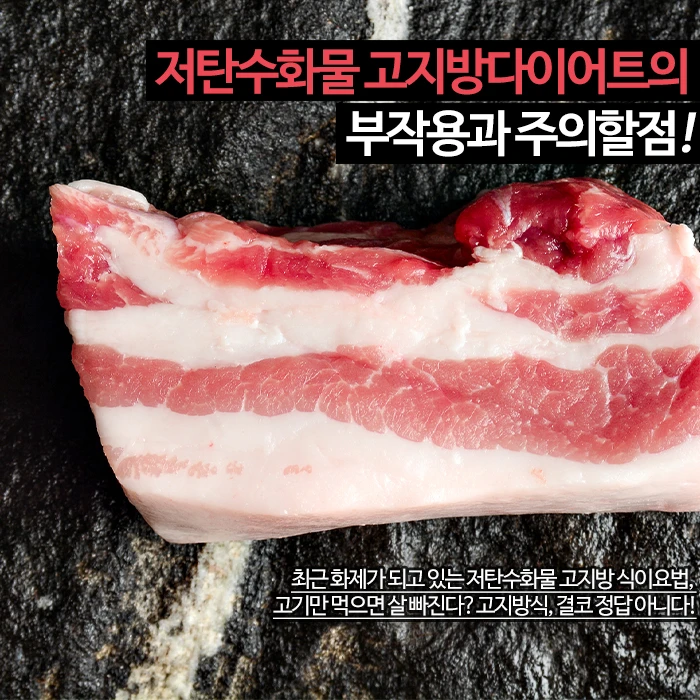
Low-carbohydrate, high-fat dieting: side effects and points to watch. The diet has recently attracted attention, but the graphic warns of significant side-effect risks and says it requires proper understanding and health monitoring.
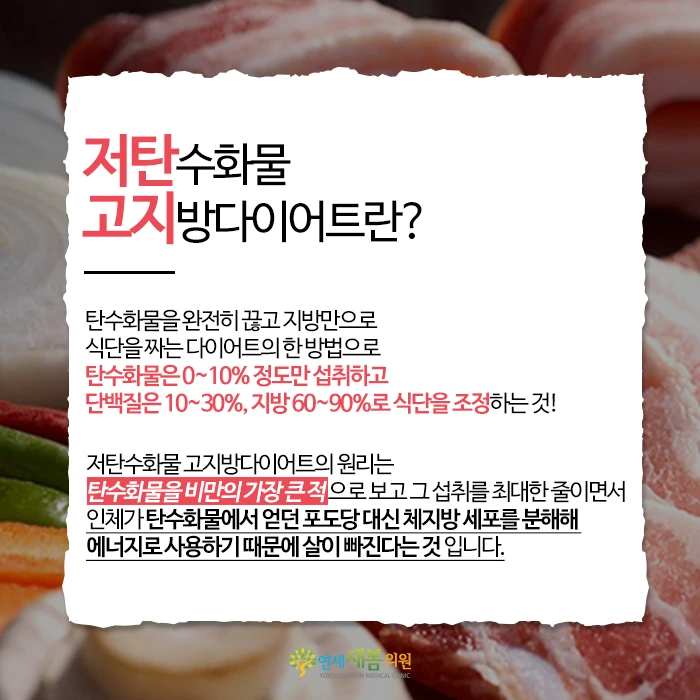
The original graphic defines LCHF as eliminating carbohydrate and planning meals around fat. It gives proportions of 0–10% carbohydrate, 10–30% protein and 60–90% fat. It describes carbohydrate as the principal enemy of obesity and says reducing it causes stored fat to be broken down for energy instead of glucose.

Long-term low-carbohydrate, high-fat dieting can harm health, the graphic warns. Five Korean societies—the Korean Endocrine Society, Korean Diabetes Association, Korean Society for the Study of Obesity, Korean Nutrition Society and Korean Society of Lipid and Atherosclerosis—issued a joint statement expressing concern that its long-term suitability had not been established and that it could cause adverse health problems.

1. Long-term effectiveness can be difficult to achieve The societies described low-carbohydrate, high-fat eating as difficult to maintain over a long period. By encouraging early fullness and suppressing appetite, it may produce substantial short-term weight loss. However, the article reports their view that long-term benefits are difficult without an appropriate approach and exercise.

The original graphic states that long-term low-carbohydrate, high-fat eating may raise LDL cholesterol and cardiovascular disease risk. Excessive fat intake can also cause nutritional imbalance and reduced fiber intake.
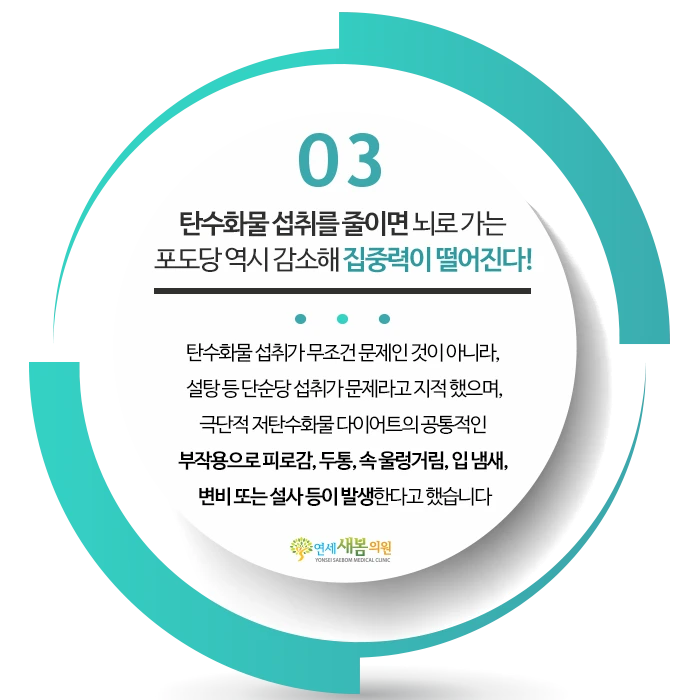
The graphic says reducing carbohydrate reduces glucose available to the brain and impairs concentration. It identifies simple sugars such as sugar and fructose, rather than all carbohydrate, as the concern. It lists fatigue, headache, nausea, bad breath, constipation and diarrhea as common adverse effects of extreme low-carbohydrate diets.

1. Understand your eating habits accurately. The graphic gives a carbohydrate limit of 65% and a fat limit of 30% of total intake. (The article’s prose gives 35% for fat; both source versions are preserved here.) 2. Reduce simple sugars and saturated fats first, and choose fiber- and nutrient-rich whole grains such as barley, buckwheat, corn, sorghum, millet, whole wheat and brown rice. 3. People with hypertension, diabetes or cardiovascular disease should choose diets carefully; the graphic says varied nutrients are important and considers LCHF inappropriate for these groups.

Even if high-fat dieting has short-term benefits, the graphic warns that indiscriminately avoiding carbohydrate can harm health. Genes, fat intake and breakdown, metabolism, hormone secretion and environmental factors differ between people. It recommends specialist consultation, blood tests and assessment of the individual’s condition before seeking advice on a suitable diet and eating approach.

The graphic recommends specialist consultation, blood hormone testing and body-composition analysis, including muscle mass, body fat and basal metabolic rate, before advice on suitable eating. It says YONSEI SaeBom Medical Clinic expanded a blood-test-based program previously limited to some VIP clients and offers structured, individually tailored weight-management programs.

Dr. Chae Yong-hyeon’s Hormone Balance Clinic. The original banner describes the clinic as based on safe, effective hormone treatment.

Dr. Chae Yong-hyeon’s Hormone Balance Diet.