

Original article
Why do we keep eating? Hunger is normal, but the article describes excessive consumption of sweet foods as binge eating. People often say they relieve work, study, job-search and life stress by eating. Can stress-related binge eating be addressed?
Serotonin, associated with happiness: the article closely links binge eating with hormones. Let us look at serotonin, which influences emotions and appetite.
Serotonin is a neurotransmitter released in the brain. The article describes it as helping us feel happiness and reducing depressed feelings. It calls serotonin a central component in regulating mood, appetite, sleep and pain.
Serotonin also helps the brain perceive fullness and promotes a desire to reduce food intake. The article explains that insufficient serotonin can leave a person feeling hungry and increase cravings for sweet, fatty foods, leading to binge eating. It says sweets then increase serotonin, allowing fullness to be felt and the binge to stop.
The article says meat supplies material used to produce serotonin, but that conversion in the body takes time, leading people to choose sweets instead. It describes serotonin as made from tryptophan, referred to in the source as a protein. Eating tryptophan-rich foods is presented as a way to support serotonin. Although these are abundant in meat, their breakdown and conversion take time, encouraging cravings for foods that raise blood sugar. The original article claims that such foods promote fat storage irrespective of calories, make obesity easier and disturb other hormones, and recommends avoiding them. To increase serotonin, it suggests building meals around the foods shown in the accompanying graphic while avoiding foods that sharply raise blood sugar. Eating tryptophan-rich food is presented as a basic way to prevent binge eating attributed to serotonin deficiency.
Other everyday approaches proposed for increasing serotonin include avoiding caffeine-containing foods, exercising regularly, getting sufficient sunlight, chewing thoroughly, minimizing stress and recalling happy memories.
Serotonin brings feelings of happiness and pleasure, but the article associates insufficient levels with extremes such as binge eating. It therefore emphasizes avoiding hormone deficiency.
To understand your health, the original post directs readers to the YONSEI SaeBom Medical Clinic Hormone Balance Clinic.
Original illustrations & English text
The original artwork is preserved below, with English translations of the text in each illustration.
The happiness-related hormone serotonin: “Hormones make me happy.” Dr. Chae Yong-hyeon’s Hormone Balance Clinic.
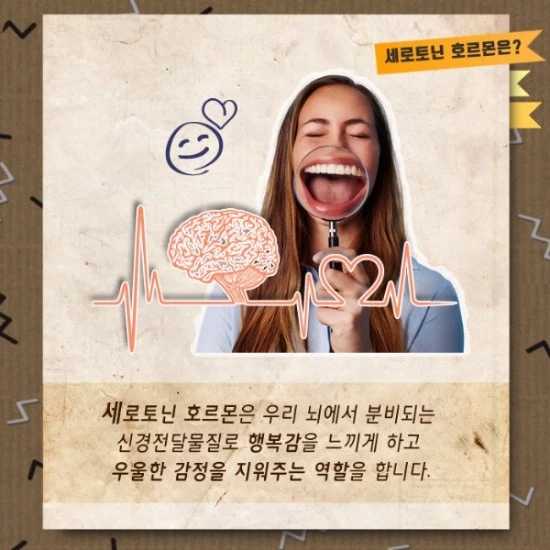
Serotonin is a neurotransmitter released in the brain, described here as helping people feel happiness and reducing depressed feelings.
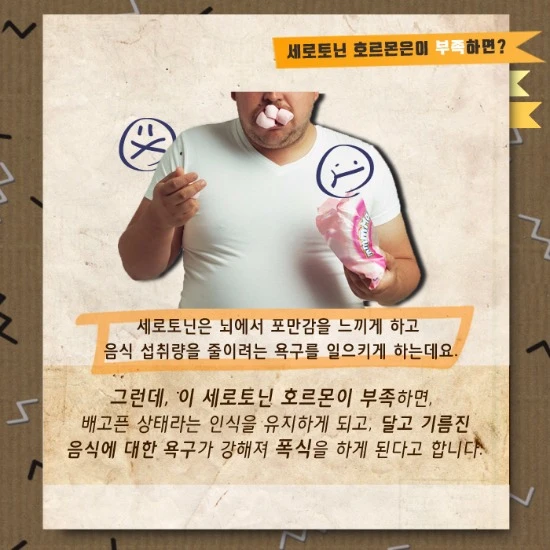
Serotonin helps the brain perceive fullness and reduces the desire to eat. The original graphic says a shortage leaves a person feeling hungry, increases cravings for sweet, fatty foods and may lead to binge eating.
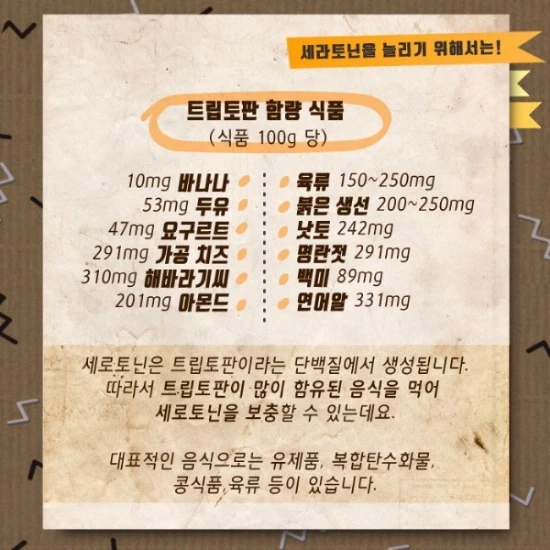
Increasing serotonin: tryptophan content per 100 g of food, as listed in the original graphic. Banana: 10 mg; soy milk: 53 mg; yogurt: 47 mg; processed cheese: 291 mg; sunflower seeds: 310 mg; almonds: 201 mg; meat: 150–250 mg; red-fleshed fish: 200–250 mg; natto: 242 mg; pollock roe: 291 mg; brown rice: 89 mg; salmon roe: 331 mg. The graphic describes serotonin as made from tryptophan, referred to there as a protein, and recommends tryptophan-rich foods such as dairy products, complex carbohydrates, beans and meat to support serotonin.
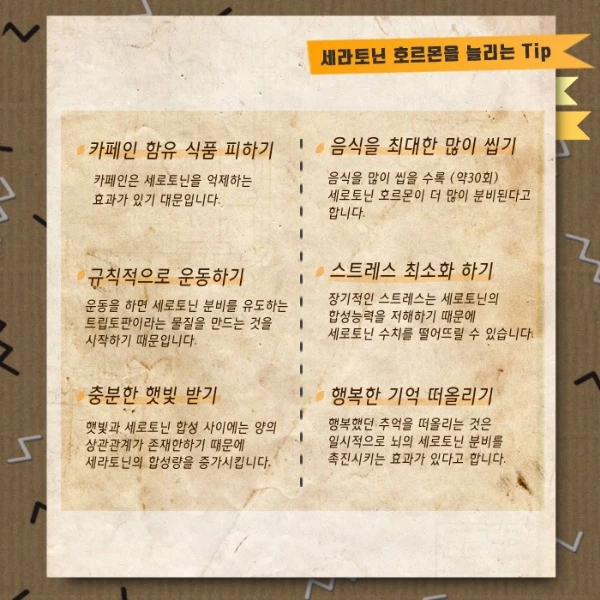
Tips proposed by the graphic: avoid caffeine-containing foods, which it says suppress serotonin; exercise regularly, which it describes as promoting production of tryptophan involved in serotonin release; get sufficient sunlight, noting a positive relationship with serotonin synthesis; chew thoroughly, approximately 30 times, which it associates with more serotonin release; minimize stress, since prolonged stress may inhibit serotonin synthesis and lower levels; and recall happy memories, which it says may temporarily promote serotonin release in the brain.

Hormones need to be balanced to function properly. The graphic recommends professional assessment of the body’s condition and treatment appropriate to the particular hormone affected. Dr. Chae Yong-hyeon’s Hormone Balance Clinic.