

Original article
When clear skies and a cool autumn breeze brush against me, does my appetite come back to life?
Autumn is known in Korean as the season when “the sky is high and horses grow fat.” The expression refers to clear weather and abundant food allowing livestock to gain weight. So much food, so much weight… Why does appetite seem to surge in autumn?
The article says appetite-related hormones increase in autumn as the body stores fat in preparation for winter. It connects this with increased susceptibility to binge eating, weight regain and hormone imbalance during autumn.
Episode 224 of Cheon Gi Nu Seol examined the causes of strong food cravings. Two people featured on the program reportedly lived with cravings so intense that they could not control their eating.
One, a homemaker, said she always bought plenty of meat and kept the refrigerator stocked. At a meal she would eat around three servings of meat, then mix rice into the broth before finishing.
Her uncontrollable appetite led to eating substantially more than a single person's portion at one sitting.
The other participant was an office worker. With a busy working life, they ate delivery meals or easy-to-prepare instant food after work, together with beer. Despite the late hour, they ate enough to fill their stomach, describing this as a way to relieve emptiness.
Office workers and homemakers may relate to these experiences. The program assessed both participants' health because they struggled to limit food.
Both had obesity with high body-fat percentages. Another notable finding was leptin, the hormone involved in appetite suppression and fullness, at more than four times normal. The article explains that when leptin is so high, fullness may not be perceived after eating and repeated “false hunger” may appear, leading people to eat unnecessary food. How should appetite-related hormones be addressed?
The article emphasizes awareness of health to prevent increased leptin, described here as a food-craving hormone. Understanding how foods affect the body, eating suitable quantities and improving daily habits are presented as ways to address hormonal imbalance. If this is difficult or unclear, it suggests using a program that coaches and improves unsuitable habits.
Original illustrations & English text
The original artwork is preserved below, with English translations of the text in each illustration.
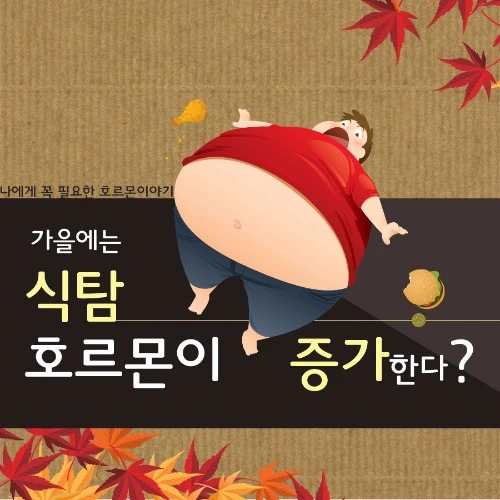
Do food-craving hormones increase in autumn?
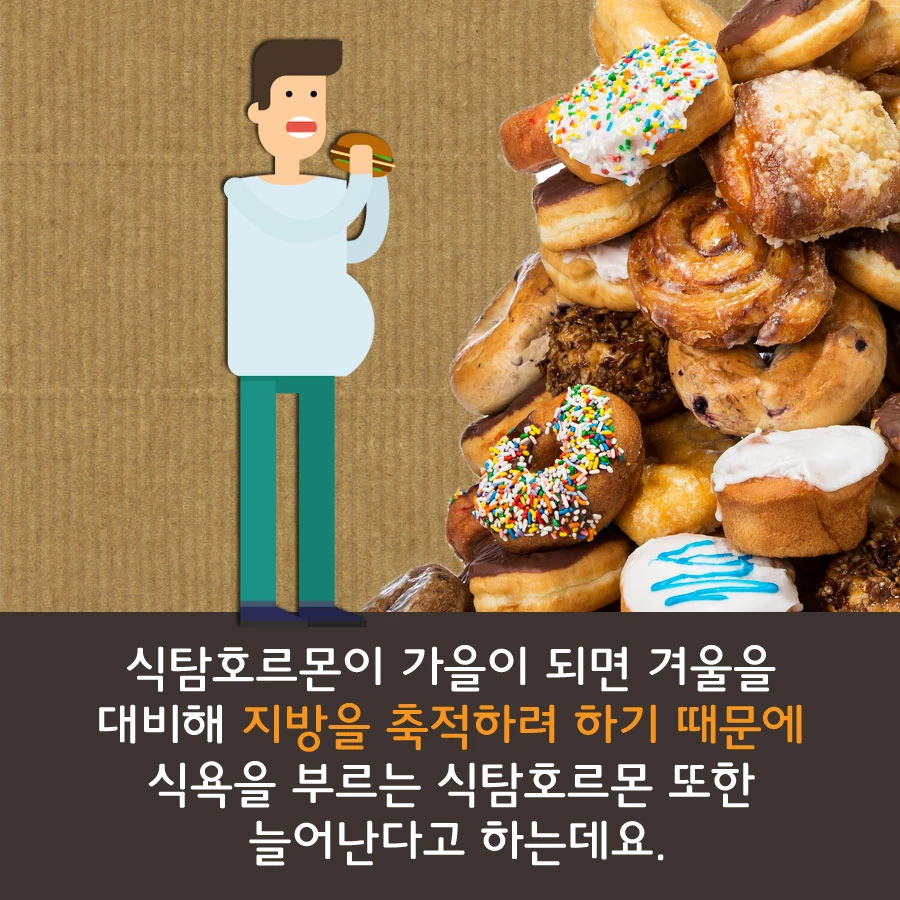
The original graphic says that autumn food-craving hormones encourage fat storage in preparation for winter and that appetite-related hormones consequently increase.
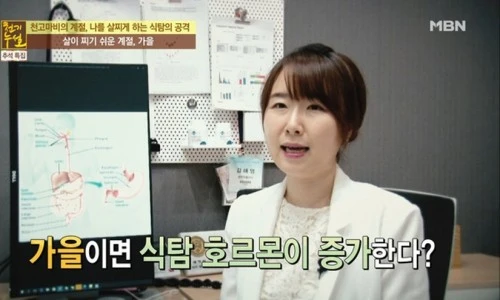
“Do food-craving hormones increase in autumn?”

Kim Myeong-ok says: “When food runs low, I feel rather empty. It has become a habit to refill it before it runs out.”

Kim Myeong-ok says: “I cannot control my cravings, so my hand keeps reaching for food and I eat until it is all gone.”

The program describes Kim Seon-hui as relieving workplace stress with beer and chicken.

The program says a busy working life leads her to choose instant food.

The program describes Kim Seon-hui’s overeating and excess weight as becoming part of everyday life.
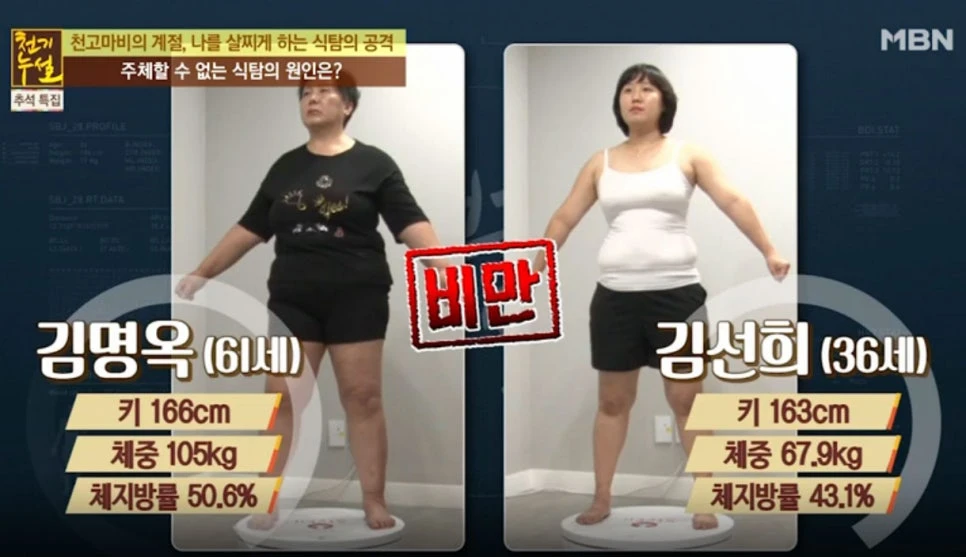
The program labels both participants as having obesity. Kim Myeong-ok, 61: height 166 cm, weight 105 kg, body fat 50.6%. Kim Seon-hui, 36: height 163 cm, weight 67.9 kg, body fat 43.1%.
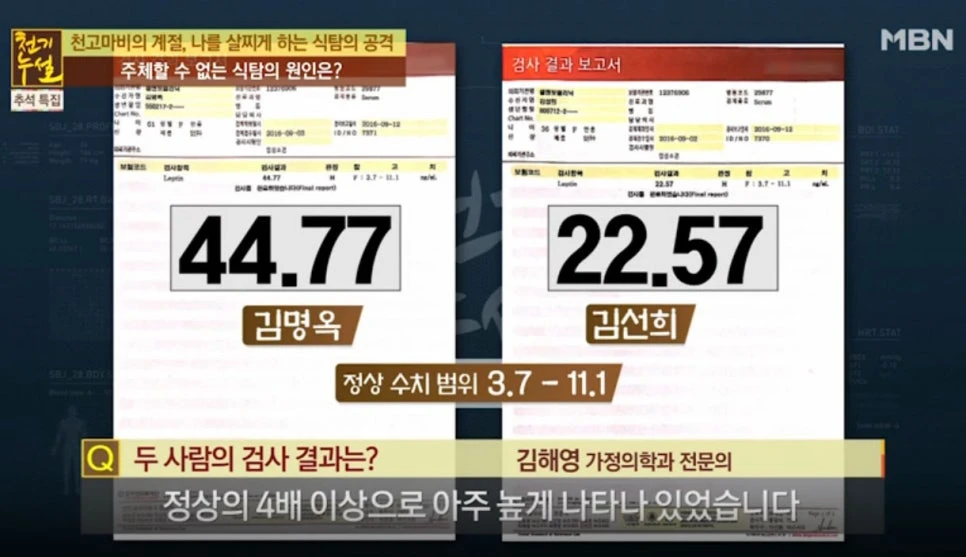
Leptin-test values shown: Kim Myeong-ok 44.77; Kim Seon-hui 22.57. The graphic gives a normal range of 3.7–11.1. Family-medicine specialist Kim Hae-yeong describes a result as more than four times normal.
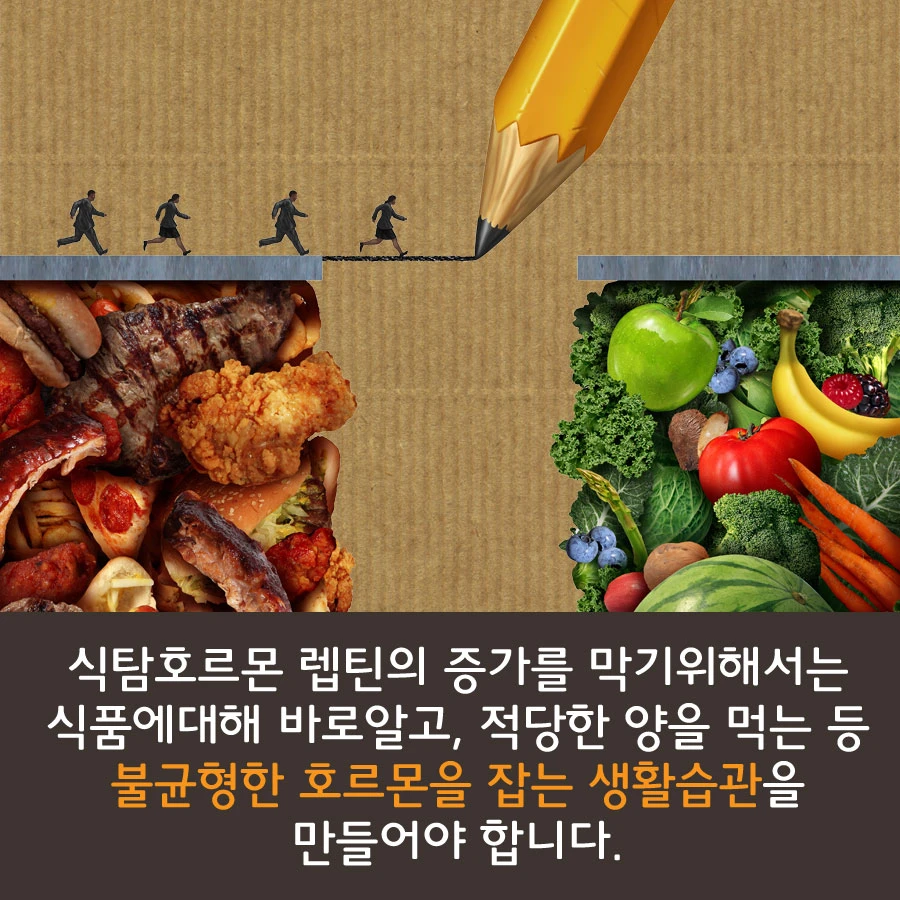
To prevent an increase in leptin, described as a food-craving hormone, the original graphic recommends understanding foods, eating suitable quantities and developing daily habits that address hormone imbalance.

The graphic invites readers to restore healthy living through an individualized Hormone Balance Diet program at YONSEI SaeBom Medical Clinic.

Dr. Chae Yong-hyeon’s Hormone Balance Diet.