

Original article
Have you seen episodes 719 and 720 of MBC Special, “Turning the Tables on Conventional Wisdom: The Misunderstanding of Fat”?
The program explored a “high-fat dietary approach,” presented as improving health by changing meals toward high-fat foods. Case studies from around the world showing weight loss and regained health, along with medical analysis, challenged conventional ideas of fat as a principal cause of metabolic conditions such as obesity, hypertension and high cholesterol.
The approach mainly discussed on the program was to eat high-quality fatty foods and strictly exclude carbohydrate-containing foods.
The accompanying chart shows foods for a low-carbohydrate, high-fat eating plan. The important point was food quality: avoid processed foods and reduce carbohydrate and sugar intake.
Butter and oil ingredients also needed careful checking. The program's explanation was that the body has difficulty accepting processed fats, so a high-fat approach should use natural fats. The article lists coconut oil, palm oil, perilla oil, olive oil and rapeseed oil as permitted oils. It describes eating freely whenever hungry without restrictions on amount or timing, choosing leafy rather than underground vegetables for fiber and magnesium, and drinking at least 1–1.5 liters of water per day. Avoiding sugar and carbohydrate was described as the central principle.
To demonstrate this in greater detail, the program followed four people who usually struggled with dieting. They adopted low-carbohydrate, high-fat meals and had changes assessed over one month.
The article reports that every participant lost weight and that blood sugar returned to normal. Beyond changes in weight, it emphasizes another factor. All participants had reportedly struggled to lose weight despite healthier food, more movement or smaller meals, and chronic pain and conditions such as plantar fasciitis and diabetes had not improved.
More detailed tests examined their current condition. The article attributes their difficulty losing weight and declining health to markedly abnormal hormone levels. Before the dietary change, insulin was reported as more than three times normal; leptin was reportedly as high as seven times normal, indicating imbalance.
What are insulin and leptin? The article describes insulin as breaking down sugar dissolved in the blood and storing leftover sugar in fat cells. It explains that, when insulin does not work properly, the body supplies more insulin to handle sugar. Increased insulin is then described as storing more fat. The article therefore links insulin problems and increasing insulin resistance with weight gain.
Leptin, discussed as relevant to overeating, helps regulate appetite and recognition of fullness. When it works appropriately, we feel satisfied. The article describes impaired leptin action as leading to more leptin release and high levels, while fullness is not felt despite eating plenty, encouraging continued food-seeking.
The article concludes that hormones were behind the weight gain and that high-fat eating was one way used to address the imbalance.
For more about obesity and hormones, see the earlier post: http://blog.naver.com/saebom2468/220778726429
The program's clinicians discussed obesity as shown in the accompanying images.
The clinicians emphasized hormones and paid attention to hormone-level changes following the high-fat approach. The article suggests that high-fat eating may suit some hormone-imbalance treatment, but its side effects should not be ignored. It lists fatigue and irritability from reduced carbohydrate, described as a main energy source for everyday activity and the brain; unpleasant breath associated with ketosis; and difficulty maintaining the diet.
The article suggests that the body reflects its response to the food ingredients examined during dieting. Although reducing sugar and starch or grains is a shared principle, it describes the Hormone Balance Diet as emphasizing balanced meals based on good-quality food rather than an approach weighted toward one side, helping maintain health without an adverse response.
If you want to restore health and body shape, the article emphasizes identifying your own hormonal imbalance and stabilizing it. If the cause is difficult to understand, it recommends consulting a hormone specialist to assess your condition, and considering a program intended to restore hormonal balance.
The original post invites readers to explore the individualized Hormone Balance Diet program, described as addressing weight, body shape and health together.
The Misunderstanding of Fat / high-fat diet / high-fat, low-carbohydrate meals / high-fat dieting methods / dieting / weight-management methods / high fat / hormone tests / hormone balance.
Original illustrations & English text
The original artwork is preserved below, with English translations of the text in each illustration.
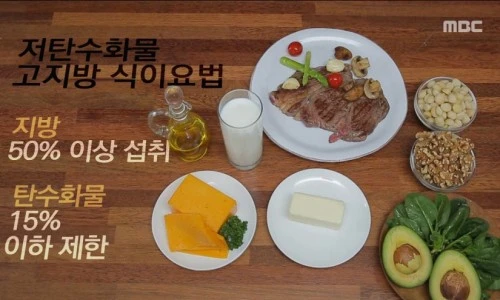
Low-carbohydrate, high-fat dietary approach: obtain more than 50% from fat and restrict carbohydrate to 15% or less.
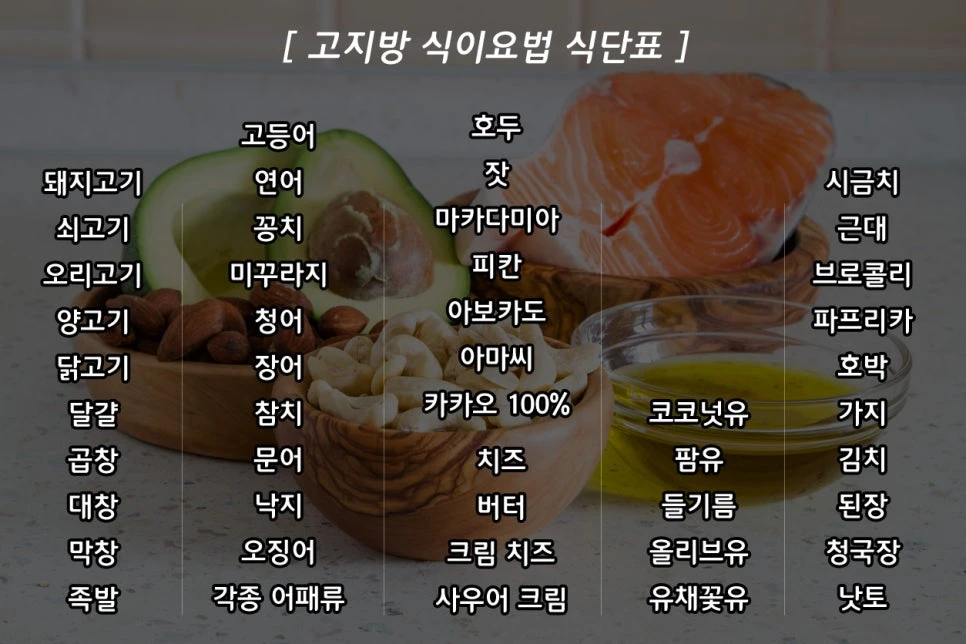
Foods listed in the original high-fat diet chart: pork, beef, duck, lamb, chicken, eggs, tripe, large intestine, abomasum and pork trotters; mackerel, salmon, saury, loach, herring, eel, tuna, octopus, small octopus, squid and assorted fish and shellfish; walnuts, pine nuts, macadamias, pecans, avocado, flaxseed, 100% cacao, cheese, butter, cream cheese and sour cream; coconut oil, palm oil, perilla oil, olive oil and rapeseed oil; spinach, broccoli, Swiss chard, bell pepper, pumpkin, eggplant, kimchi, soybean paste, fermented soybean paste and natto.

The television quotation calls vegetable oils and trans fats “bad fats.” It says the harm of trans fats is widely known, describes processed vegetable oils as another kind of bad fat, says the body has difficulty accepting processed fats, and recommends natural fats for high-fat eating. These are the views quoted in the archived program, rather than a new recommendation.

The four participants identified in the program: Noh Du-rye, 60, self-employed; Kim Yong-jun, 42, office worker; Yoo Su-jin, 46, office worker; Yoon Mi-jeong, 36, homemaker.
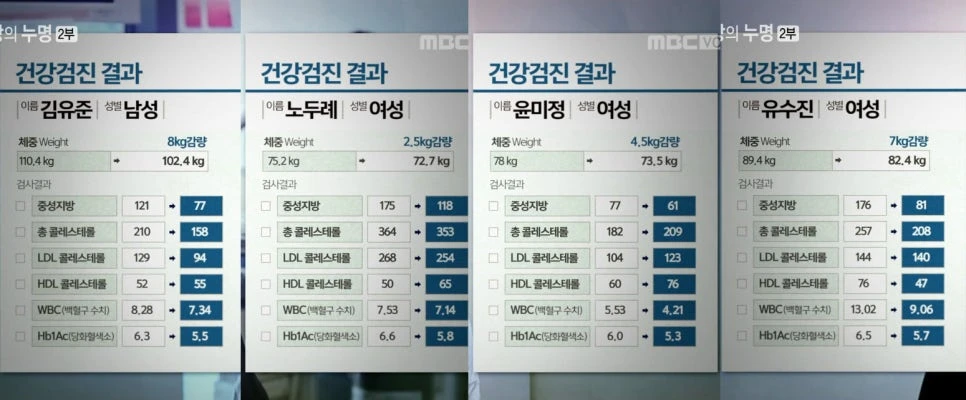
Health-check results shown in the program, before → after. Kim Yong-jun (male): weight 110.4 → 102.4 kg, loss 8 kg; triglycerides 121 → 77; total cholesterol 210 → 158; LDL 129 → 94; HDL 52 → 55; WBC 8.28 → 7.34; HbA1c 6.3 → 5.5. Noh Du-rye (female): weight 75.2 → 72.7 kg, loss 2.5 kg; triglycerides 175 → 118; total cholesterol 364 → 353; LDL 268 → 254; HDL 50 → 65; WBC 7.53 → 7.14; HbA1c 6.6 → 5.8. Yoon Mi-jeong (female): weight 78 → 73.5 kg, loss 4.5 kg; triglycerides 77 → 61; total cholesterol 182 → 209; LDL 104 → 123; HDL 60 → 76; WBC 5.53 → 4.21; HbA1c 6.0 → 5.3. Yoo Su-jin (female): weight 89.4 → 82.4 kg, loss 7 kg; triglycerides 176 → 81; total cholesterol 257 → 208; LDL 144 → 140; HDL 76 → 47; WBC 13.02 → 9.06; HbA1c 6.5 → 5.7. Units beyond weight are not supplied in this graphic.
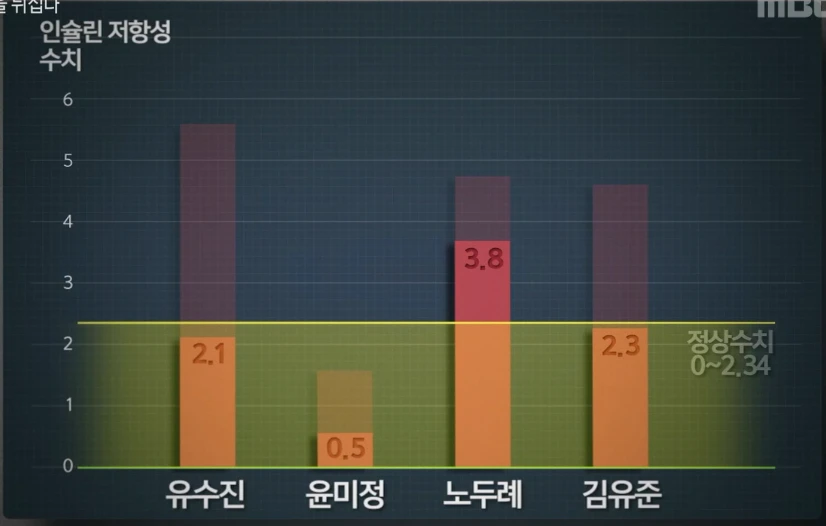
Insulin-resistance values labeled in the program: Yoo Su-jin 2.1; Yoon Mi-jeong 0.5; Noh Du-rye 3.8; Kim Yong-jun 2.3. The graphic labels its normal range as 0–2.34. Fainter bars also appear, without numerical labels.
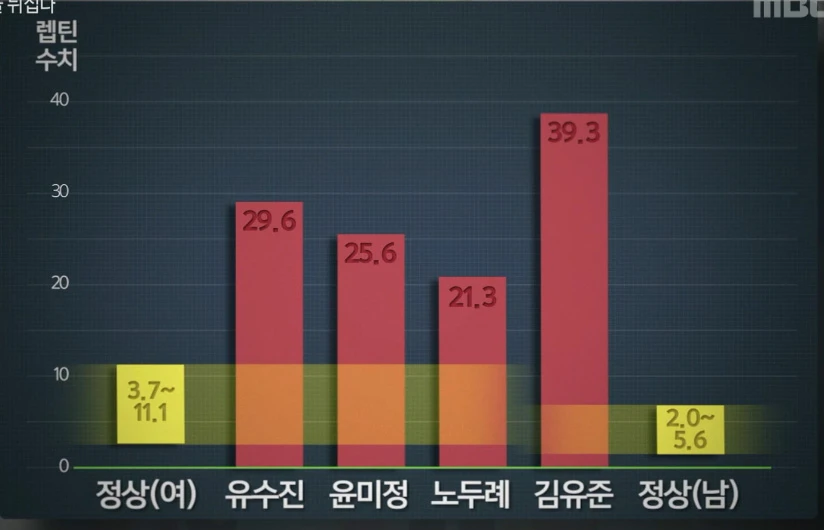
Leptin values shown in the program: Yoo Su-jin 29.6; Yoon Mi-jeong 25.6; Noh Du-rye 21.3; Kim Yong-jun 39.3. The graphic’s normal ranges are 3.7–11.1 for women and 2.0–5.6 for men. Units are not displayed.

The program describes insulin as breaking down sugar in blood and storing leftover sugar in fat cells. When this function has a problem, it says, more insulin is supplied to process sugar; increased insulin then stores more fat.
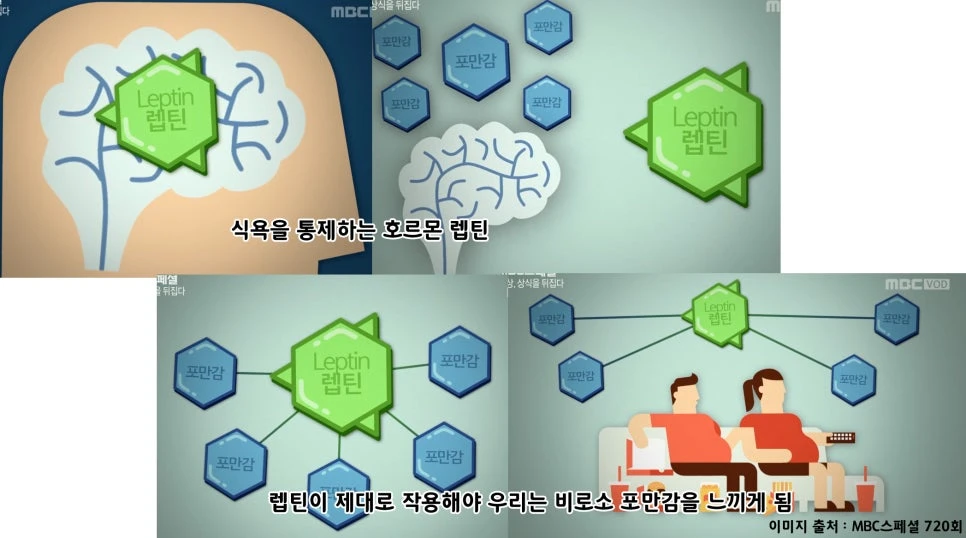
Leptin is described as a hormone controlling appetite. The program says people perceive fullness when leptin works properly.

The relationship between hormones and obesity: “How are hormones and obesity related?” Hormone Balance Diet.

Dr. Song Jae-hyeon says: “Most past dieting failures were not because of insufficient willpower. We have no choice but to lose to hormones,” as quoted in the program.

Dr. Kim Jun-young says obesity and hormones are closely connected. He describes health problems beginning when many hormones are disrupted and can no longer work together.

“High-fat dieting? At its foundation were the good-quality foods they ate and hormone balance,” says the original graphic.

Dr. Chae Yong-hyeon’s Hormone Balance Diet.