

Original article
You have probably often heard: “Drink plenty of water for your health.”
I also keep water beside me each day and try to drink frequently. However, the article warns that water consumed for health may instead harm it if approached incorrectly.
The article attributes a recommendation of 1.5–2 liters per day, about eight cups, to the World Health Organization. It says scientists recommend drinking this amount as plain water rather than beverages or food.
It states that a shortage of only 1–2% of body water can cause chronic dehydration. Water must be replenished continually; the article associates prolonged insufficient hydration with constipation, obesity, fatigue and joint problems that accelerate aging.
It therefore emphasizes drinking the stated daily amount as a simple way to replenish water. Some people who find plain water difficult drink tea instead. But can tea count as water intake?
Tea can offer some effects of water, but the article also warns of possible harm. Grain teas such as barley, brown-rice and corn tea are described as mineral-rich and beneficial. It claims cassia-seed tea, green tea, black tea and corn-silk tea contain caffeine and promote water loss, suggesting they fail to replenish water and may instead lead toward chronic dehydration. This is the archived article's claim. It advises care in choosing drinks and says commercially sold bottled water can also be divided into good and bad types. The related video appears here: http://tvpot.daum.net/v/vc6a7jjwwjcwpiaiFc55VWF
The article says to distinguish bottled water by the wording on its label. Water labeled “drinking spring water” is described as pure, mineral-containing water, whereas a “mixed beverage” is described as mineral-free distilled water with artificial additives.
Drinking immediately after waking is described as helping replace water lost overnight. The article claims water during meals can create stomach distension and, in severe cases, cause or worsen reflux esophagitis. It therefore recommends drinking slowly on an empty stomach rather than during meals.
If you keep these points in mind, the article says you are doing well today. Everyday knowledge for better health: YONSEI SaeBom Medical Clinic.
Original illustrations & English text
The original artwork is preserved below, with English translations of the text in each illustration.
Am I drinking water the right way?
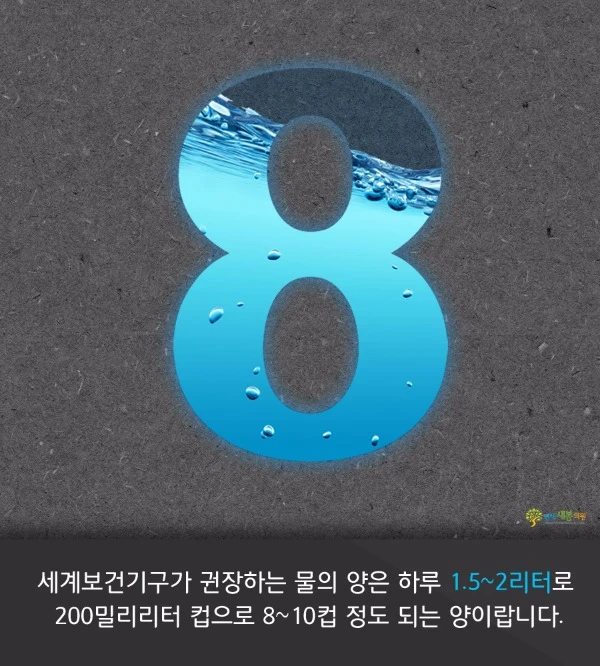
The original graphic attributes a daily water recommendation of 1.5–2 liters to the World Health Organization, approximately 8–10 cups of 200 ml each.
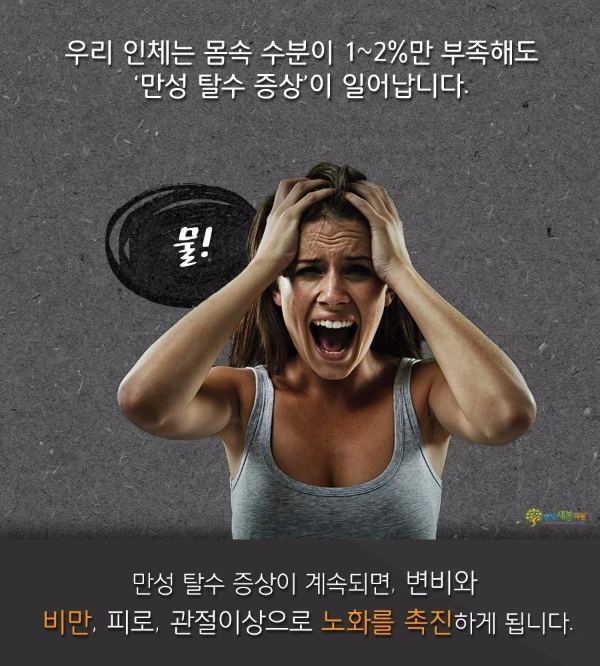
The graphic states that a 1–2% body-water shortage can cause chronic dehydration. It associates continued dehydration with constipation, obesity, fatigue, joint problems and accelerated aging.
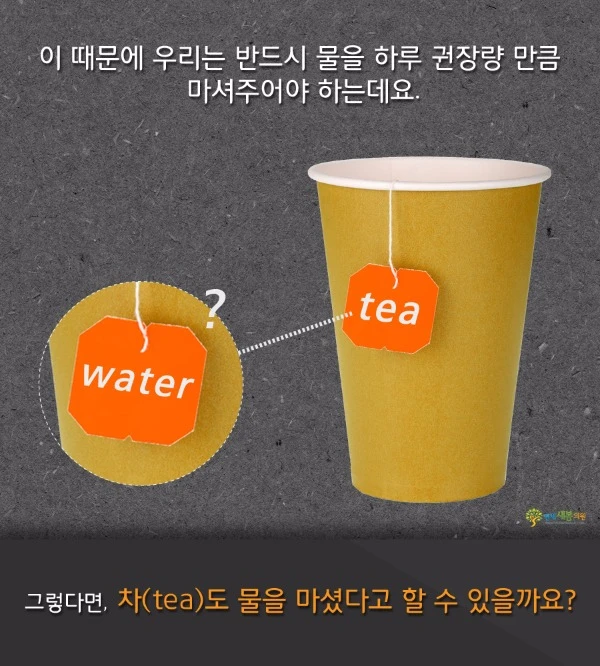
The graphic recommends drinking the stated daily amount of water and asks whether tea can count as water intake.
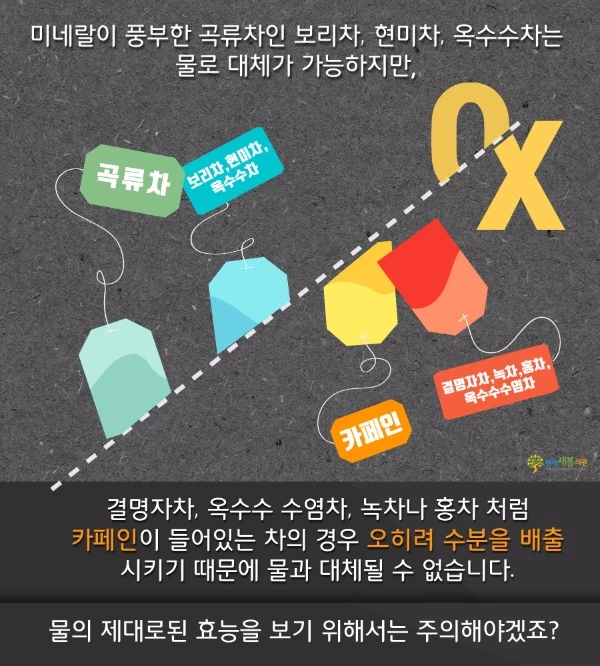
The original graphic says mineral-rich grain teas such as barley, brown-rice and corn tea can replace water. It claims cassia-seed, corn-silk, green and black teas contain caffeine and promote fluid loss, so cannot replace water. These are the archived source’s claims.

The original graphic says drinking immediately after waking replenishes water lost overnight. It says drinking with meals can cause stomach distension and worsen reflux esophagitis, and recommends drinking slowly on an empty stomach instead.