
Introduction
Obesity has many causes, including lack of exercise, stress, eating habits and hormonal imbalance. Exercise and dietary changes are usually the first things we think of when considering a diet. Yet controlling appetite is the hardest part, and almost everyone has experienced a diet failing because of appetite control. How, then, are hormones and obesity related?
First: the appetite-regulating hormone leptin and obesity. Leptin is an appetite-suppressing protein hormone that allows the brain to recognize fullness and stop eating. Produced by fat cells, it gives instructions to the brain and is often called the “appetite-regulating hormone.” The post describes increased leptin secretion, together with greater body fat and energy stores, as reducing appetite-control ability so people do not feel full and keep eating. If leptin secretion decreases for some reason, appetite rises and overeating follows. As excess calories accumulate as body fat, leptin secretion increases, leading to rebound and severe obesity through leptin resistance. Leptin resistance means that when leptin levels rise above normal, the brain responds with resistance, ignores the “do not eat” signal, and keeps eating without feeling full. A successful diet therefore requires understanding and using this appetite-regulating system.
Second: the stress hormone cortisol and obesity. Stress causes the adrenal glands to secrete cortisol. Blood sugar rises, appetite increases, and visceral fat is promoted. Stress may be the cause of abdominal obesity even in a slim person. Successful dieting under excessive stress requires superhuman effort, so reducing unnecessary stress is an essential condition of dieting.
Third: the appetite-stimulating hormone ghrelin and obesity. Ghrelin has the opposite role to leptin and increases appetite. Frequently skipping meals or continuing irregular eating habits causes signals to travel to the central nervous system and large amounts of ghrelin to be released. This makes portion control difficult and can cause overeating or binge eating. Insufficient sleep or excessive accumulated stress also increases ghrelin secretion. Ghrelin is released when the stomach empties, which relates to the advice to eat small amounts frequently while dieting.
Conversely, the reason we often feel good when bringing food to the mouth, even before eating it, is the release of dopamine and serotonin. Dopamine, a happiness hormone, is released when we are pleased or feel a sense of achievement. Serotonin is released when tension eases, a comfortable state continues, or we feel happy. Lower secretion of dopamine and serotonin increases appetite, while higher secretion has an appetite-suppressing effect.
To escape obesity and diet successfully, important daily habits include at least eight hours of sufficient sleep, walking for at least 30 minutes a day, and balanced meals. Ultimately, improving lifestyle habits and normalizing hormonal balance are particularly necessary for successful dieting.
The Hormone Balance Diet is an individualized program that addresses hormonal imbalance, described as the fundamental cause of dieting problems, and aims to support health, body shape and weight loss at the same time. Look carefully at the relationship between hormones and obesity explained today, and find a successful diet that suits you. The answer is hormonal balance. —Dr. Chae, Yong-Hyun Hormone Clinic—
Original illustrations & English text
The original artwork is preserved below, with English translations of the text in each illustration.

The relationship between hormones and obesity. How are hormones and obesity related?

The appetite-regulating hormone leptin and obesity. An appetite-suppressing protein secreted by fat cells.
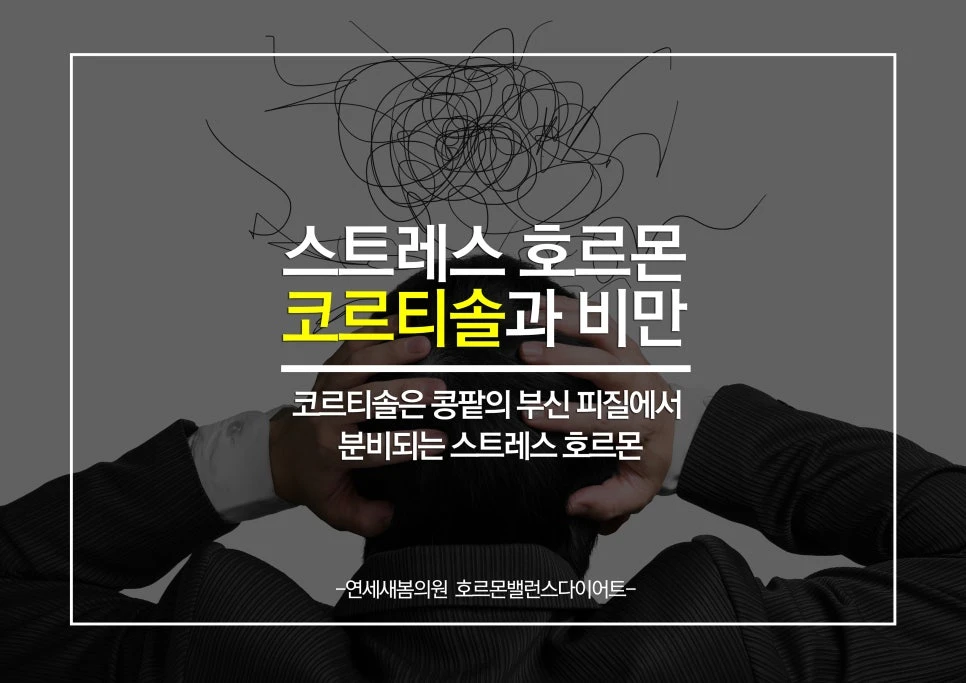
The stress hormone cortisol and obesity. Cortisol is a stress hormone secreted by the adrenal cortex in the adrenal glands.

The appetite-stimulating hormone ghrelin and obesity. Ghrelin has the opposite role to leptin and increases appetite.
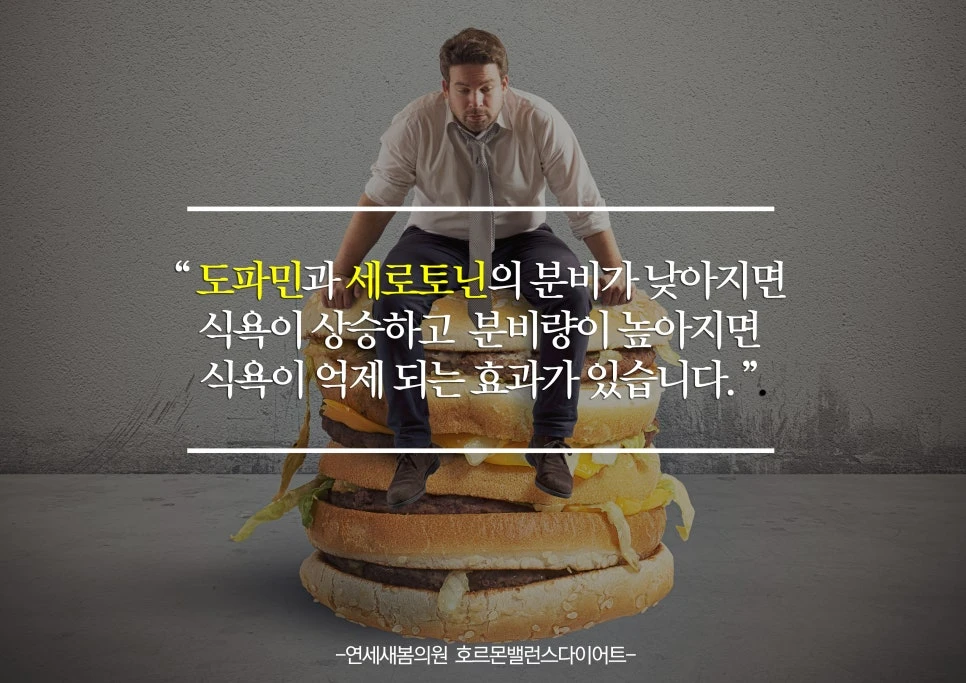
Lower secretion of dopamine and serotonin increases appetite; higher secretion suppresses appetite.
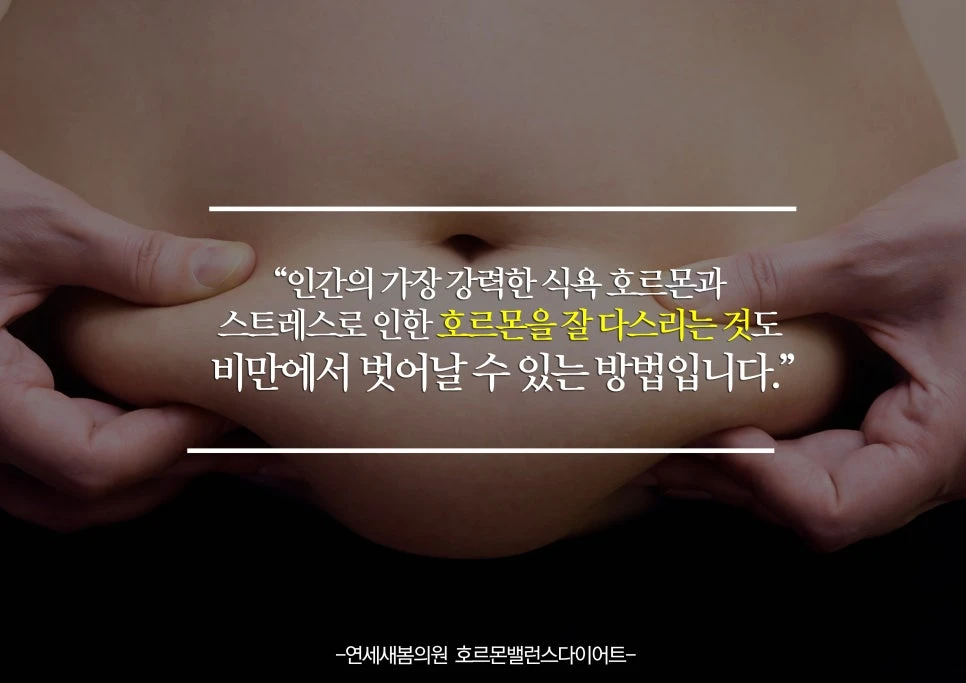
Managing hormones linked to powerful human appetite and stress is also presented as a way to escape obesity.

How can hormonal imbalance be addressed? The answer is the Hormone Balance Diet.